speaker {
    name 'Cédric Champeau'
    company 'Gradle Inc'
    oss 'Apache Groovy committer',
    successes 'Static type checker',
              'Static compilation',
              'Traits',
              'Markup template engine',
              'DSLs'
        failures Stream.of(bugs),
        twitter '@CedricChampeau',
        github 'melix',
        extraDescription '''Groovy in Action 2 co-author
Misc OSS contribs (Gradle plugins, deck2pdf, jlangdetect, ...)'''
}Extremely fast builds with Gradle 4
Who am I

Agenda
The Gradle Daemon
Continuous builds
Profiling
Incremental builds
Incremental compilation
Composite builds
Build cache
What is Gradle?
A multi-purpose build tool
Gradle Enterprise : build analytics
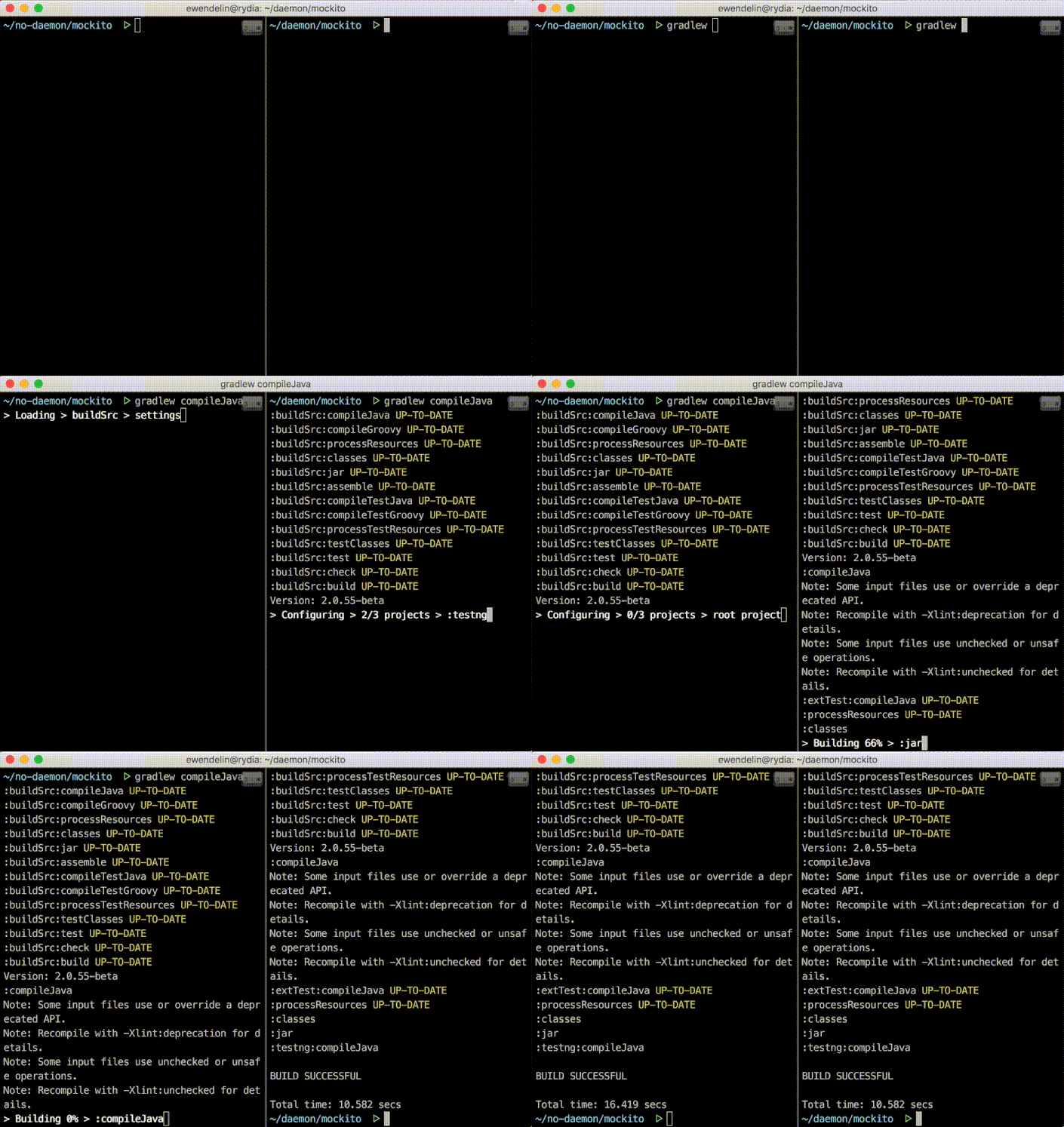
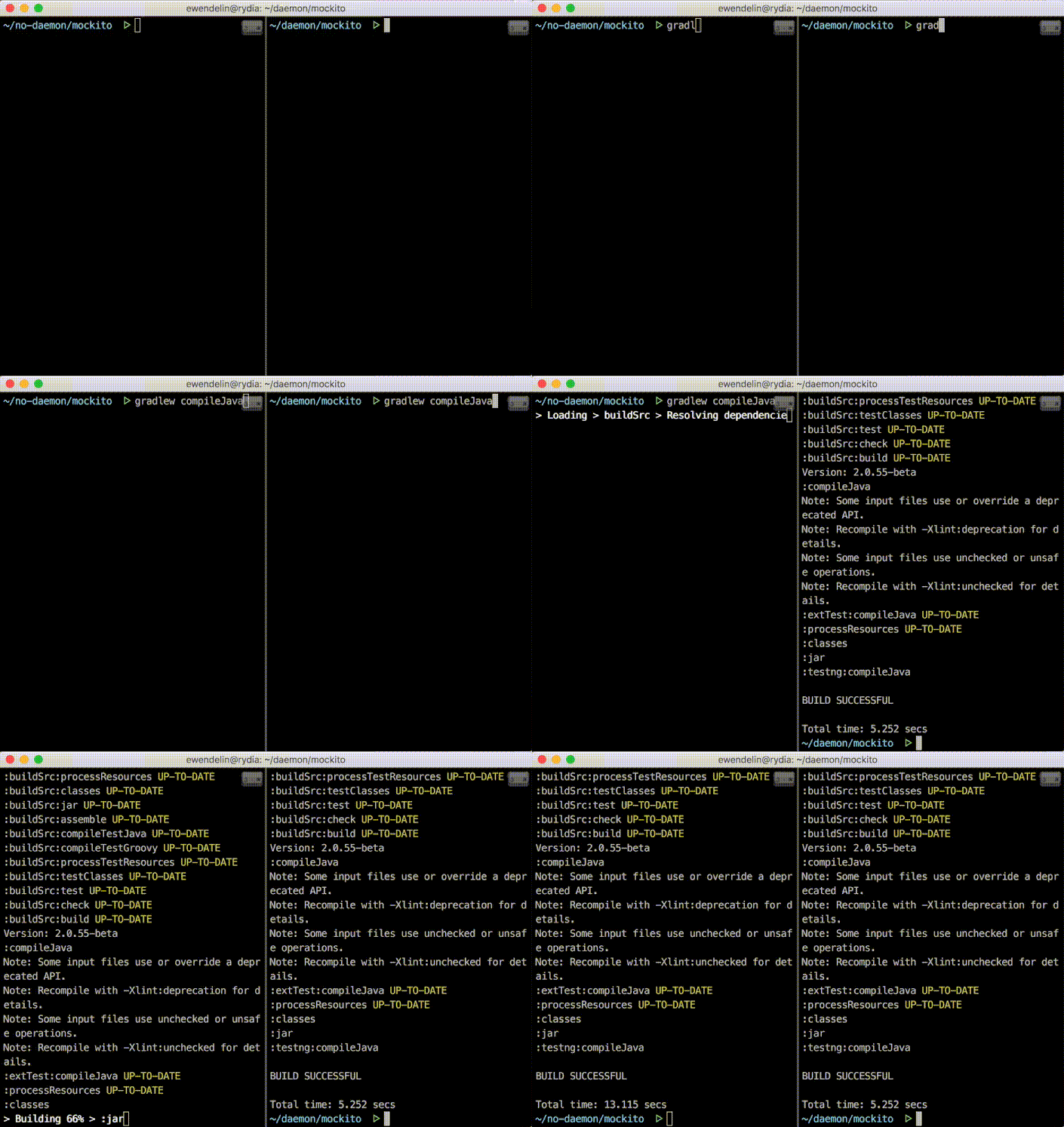
The Gradle daemon
Long-lived background process
Listens and executes build actions
Faster startup / execution
Enabled by default since 3.0
The Gradle daemon
Cold daemon
Warm daemon
Continuous builds
Gradle watches for changes in task inputs
Re-executes tasks as changes occur
Enabled with
-t
gradle -t asciidoctorBuild scans
|
|
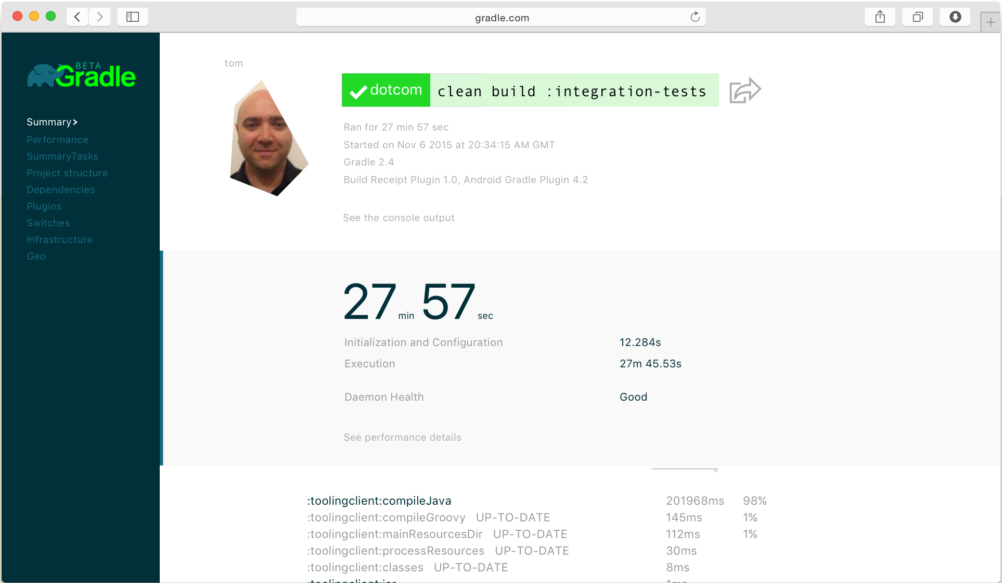
Build scan demo
https://scans.gradle.com/s/cmihj7rsqszle (Groovy) https://scans.gradle.com/s/cxwz7amaxhcdc (This talk) https://scans.gradle.com/s/ly5tnqtuoqlwe (Gradle serial) https://scans.gradle.com/s/7ftlptyifoqna (Android) http://localhost:5050/s/jzgcf2gxxrobu (Gradle parallel)
Incremental builds
Gradle is meant for incremental builds
cleanis a waste of timePrepare your builds for incrementalness
Example: building a shaded jar
task shadedJar(type: ShadedJar) {
   jarFile = file("$buildDir/libs/shaded.jar")
   classpath = configurations.runtime
   mapping = ['org.apache': 'shaded.org.apache']
}
What are the task inputs?
What are the task outputs?
What if one of them changes?
Declaring inputs
@InputFiles
FileCollection getClasspath() { ... }

@Input
Map<String, String> getMapping() { ... }
Declaring outputs
@OutputFile
File getJarFile() { ... }
Incremental compilation
Given a set of source files
Only compile the files which have changed…
and their dependencies
Language specific
Incremental compilation
Gradle has support for incremental compilation of Java
compileJava {
    //enable incremental compilation
    options.incremental = true
}
Incremental compilation
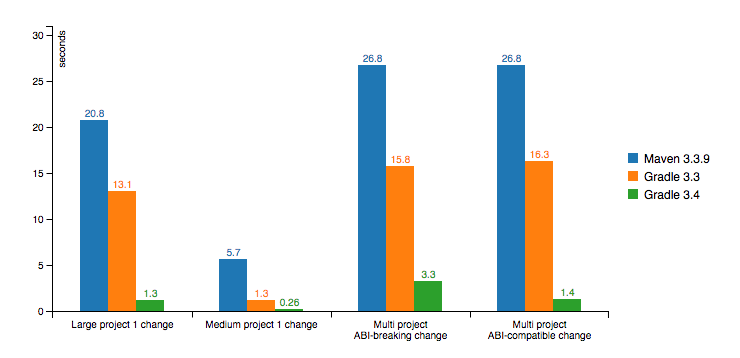
Gradle 3.4
Compile avoidance
Compile classpath vs runtime classpath
Gradle makes the difference
Ignores irrelevant (non ABI) changes to compile classpath
Usage
import com.acme.model.Person;
import com.google.common.collect.ImmutableSet;
import com.google.common.collect.Iterables;

...

public Set<String> getNames(Set<Person> persons) {
   return ImmutableSet.copyOf(Iterables.transform(persons, TO_NAME))
}
Declaring dependencies
dependencies {
   compile project(':model')
   compile 'com.google.guava:guava:18.0'
}But…
import com.acme.model.Person; // exported dependency
import com.google.common.collect.ImmutableSet; // internal dependency
import com.google.common.collect.Iterables; // internal dependency

...

public Set<String> getNames(Set<Person> persons) {
   return ImmutableSet.copyOf(Iterables.transform(persons, TO_NAME))
}
The Java Library Plugin
apply plugin: 'java-library' // instead of 'java'Separating API from implementation
dependencies {
   api project(':model')
   implementation 'com.google.guava:guava:18.0'
}
Benefit
No more compile classpath leakage
Downstream dependencies not recompiled when internal dependency changes
Composite builds
Compose various projects as if there were one
Each project can live in its own repository
Each project has its own Gradle build
Composition unites them through dependency resolution
Composite builds
Split monolithic projects
For large multiproject builds, allows splitting them into several pieces
Each piece can be versioned independently
Developers can choose what subprojects they care about
Composite builds demo time!
Gradle 3.5+
Build cache
Avoid doing work even after clean
Share binaries between projects on a single machine
Share binaries between projects on a network
Backend agnostic
Enabling the build cache
From CLI
./gradlew --build-cache <some tasks>Globally
gradle.properties
org.gradle.caching=trueWhat to expect?
Enable it on CI!
Dramatically reduces feedback loop time
Can separate push and pull
ext.isCiServer = System.getenv().containsKey("CI")

buildCache {
    local {
        enabled = !isCiServer
    }
    remote(HttpBuildCache) {
        url = 'https://example.com:8123/build-cache/'
        push = isCiServer
    }
}
Build cache use cases
Medium to large multi-projects
Bisecting
Multiple checkouts of same project on local machine
What’s next?
Parallel by default
Parallel dependency resolution
Parallel execution of tasks
Intra-task parallelism
Open API for worker threads/process
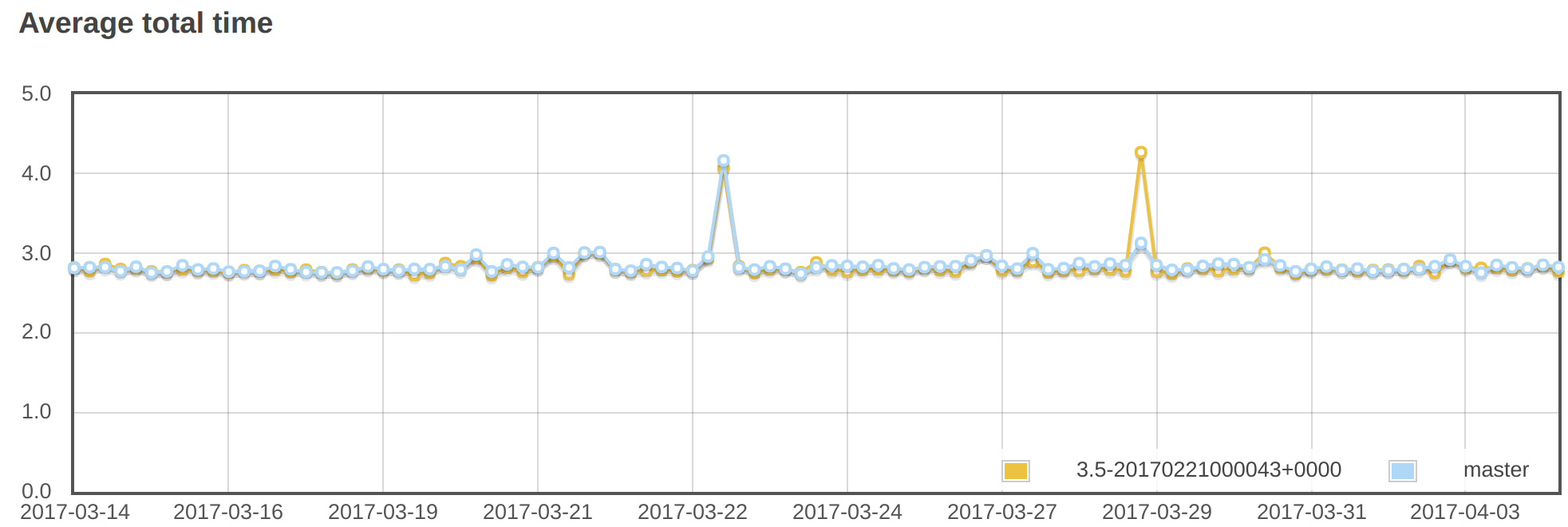
Performance in larger ecosystem
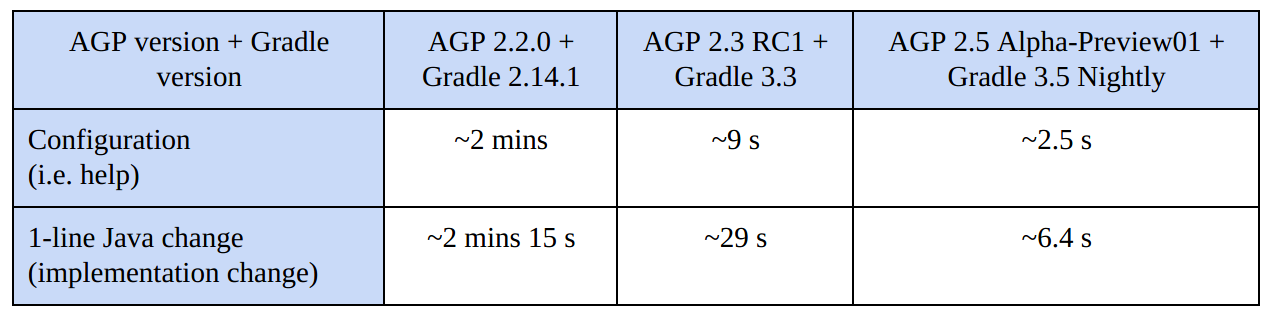
What about Android?
Performance guide
Thank you!
Slides and code : https://github.com/melix/devoxxfr-fast-builds
Gradle documentation : http://gradle.org/documentation/
Follow me: @CedricChampeau
Learn more at www.gradle.org
